
Autumn colouring?
There comes a moment in the garden when the green begins to retreat.
The sun sits lower, the days grow shorter, and suddenly colours appear that were there all summer — simply hidden beneath the foliage.
What we perceive as autumn colouring is, in fact, the plant’s careful preparation for its winter rest.
1. What is autumn colouring?
Leaves are the plant’s energy factories.
Their green colour comes from chlorophyll, the pigment that captures sunlight to produce sugars through photosynthesis.
As the days grow shorter and the nights colder, the plant receives the signal that the growing season is coming to an end.
Chlorophyll production stops, and the remaining pigment is broken down and recycled — the valuable building blocks (nitrogen, magnesium) are stored in the stems and roots for the following spring.
What remains are the other leaf pigments that now become visible, or are even produced anew.
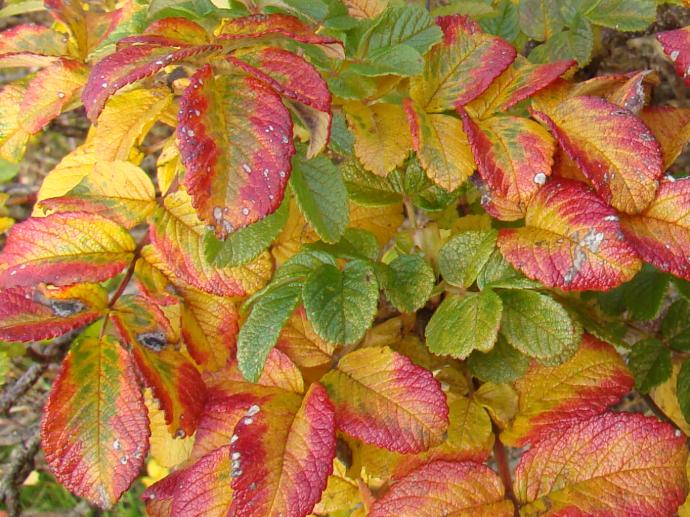 Older leaves often change colour first
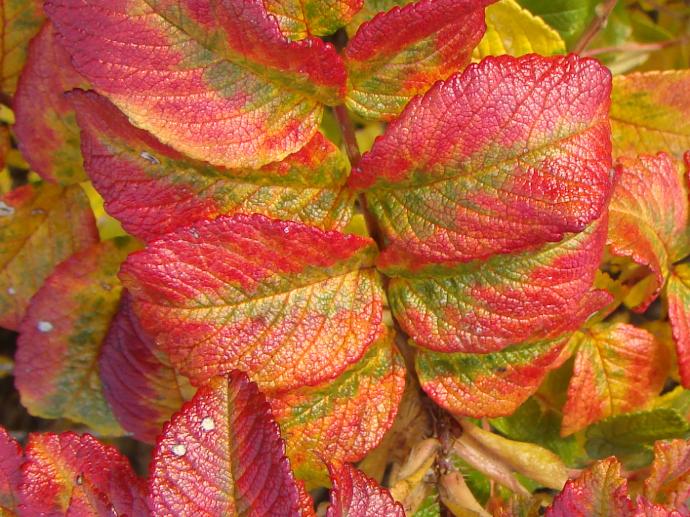 The green gradually retreats
2. The pigments that paint the autumn
Three groups of pigments play the leading roles in this yearly spectacle:
-
Chlorophylls – green
-
Active during summer
-
Break down in autumn
-
-
Carotenoids – yellow and orange
-
Always present, but overshadowed by chlorophyll
-
Become visible as the green fades
-
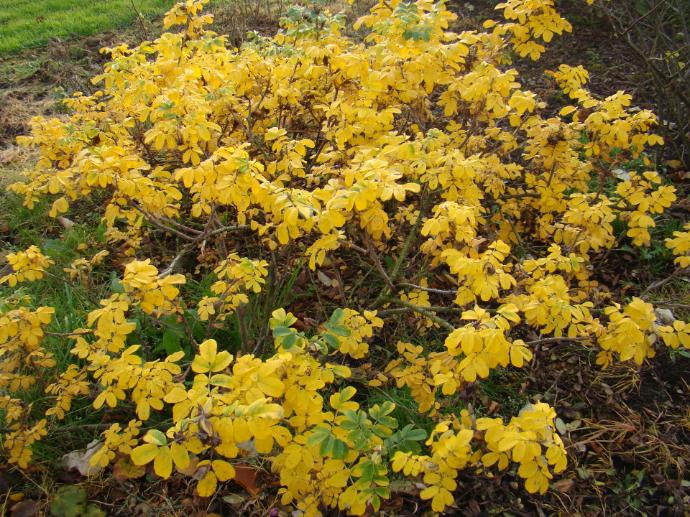
Responsible for the buttery-yellow tones of Rosa rugosa and its varieties, in which a touch of orange or red sometimes shines through
-
-
Anthocyanins – red and purple
-
Often formed only in autumn from sugars that remain in the leaf
-
Their production is stimulated by cold nights and sunny days
-
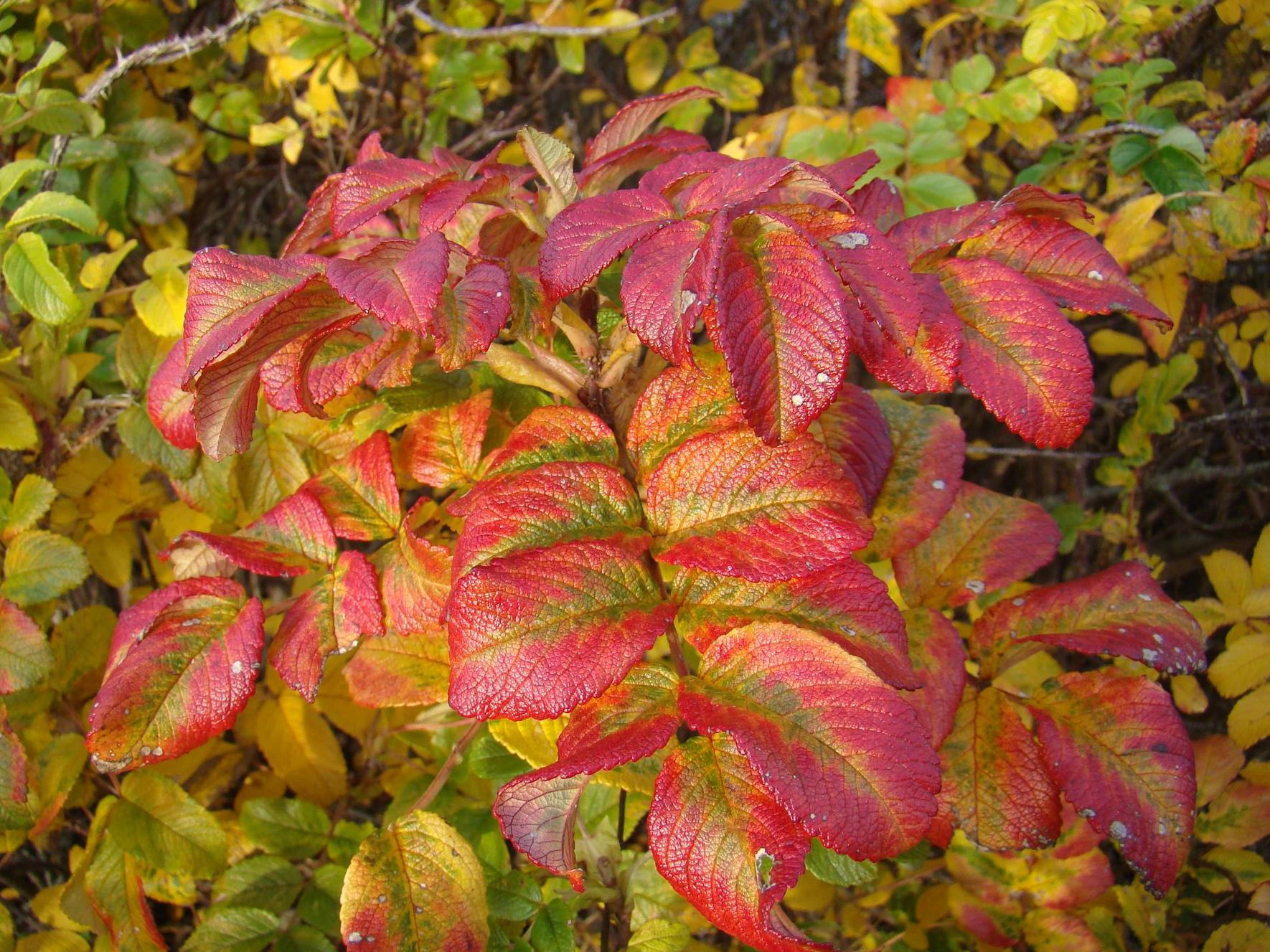
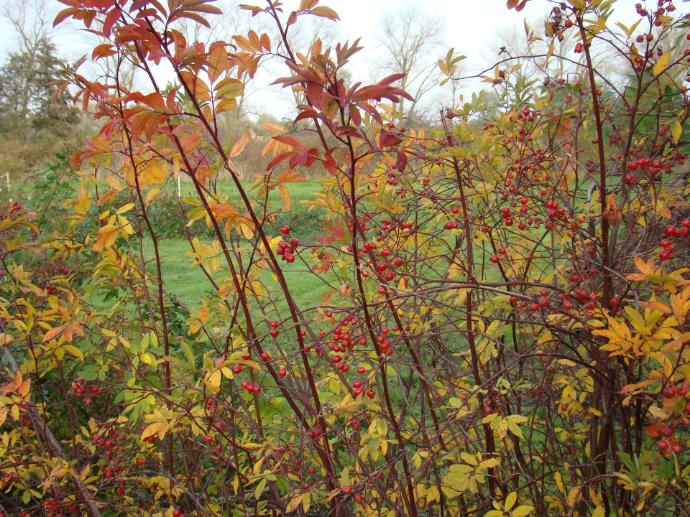
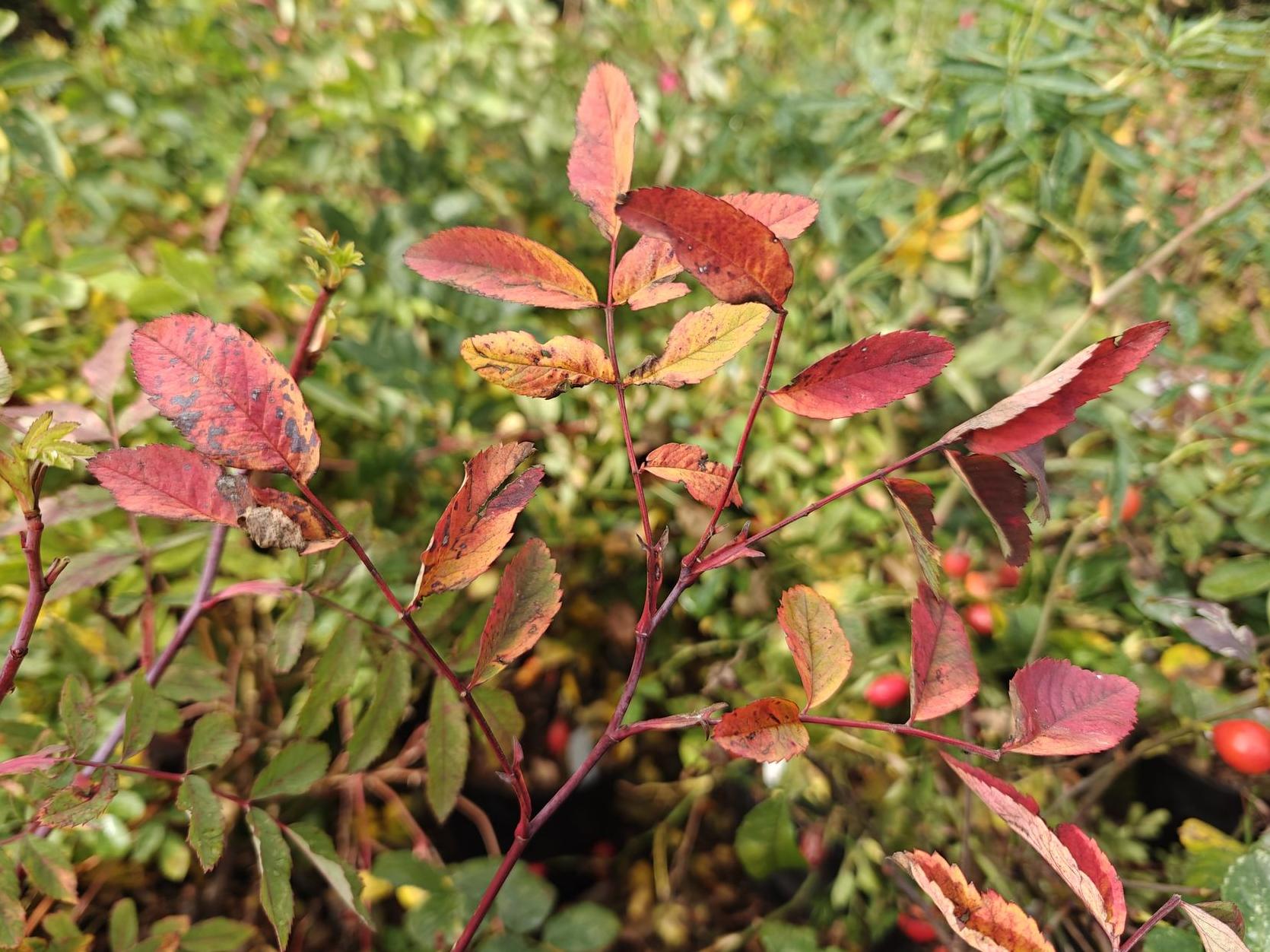
They give the fiery tones of R. palustris, R. nitida, R. virginiana, R. carolina and R. kochiana, all species with American blood.
That connection is more than symbolic: in North America, autumns are usually cool and sunny — exactly the conditions in which plants produce large amounts of anthocyanins, the red and purple pigments that make leaves glow.
In Europe, by contrast, the transition to winter is milder, wetter and greyer, so these pigments form in smaller quantities.
-
3. Why does the plant do this?
The colour change itself is not the goal, but a byproduct of a highly efficient survival mechanism.
The plant:
-
Recovers nutrients from the leaves
-
Seals off the sap flow with a cork layer at the leaf stem
-
Lets the leaves fall once this separation layer is complete
In this way, it prevents water or fungi from entering through the leaf scars and reduces the risk of drying out or frost damage during winter.
The bright colours are therefore the visible outcome of a biochemical process that is all about survival.
4. Roses in their autumn dress
This process is also clearly visible in the rose garden — often with a surprising richness of shades and textures.
Red Robin and Pink Robin
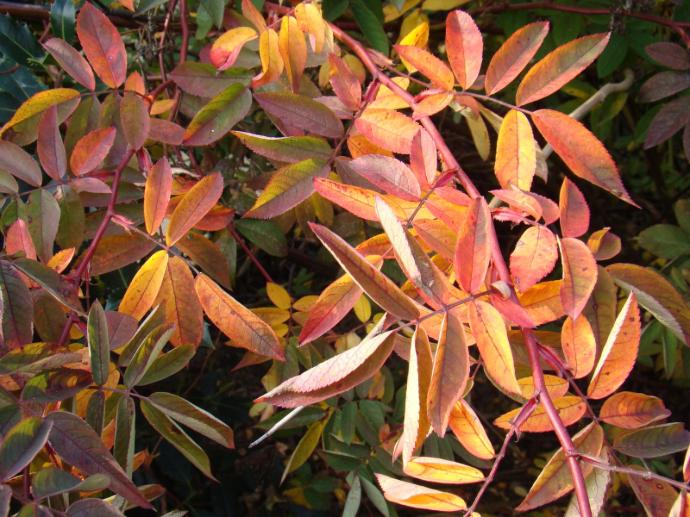
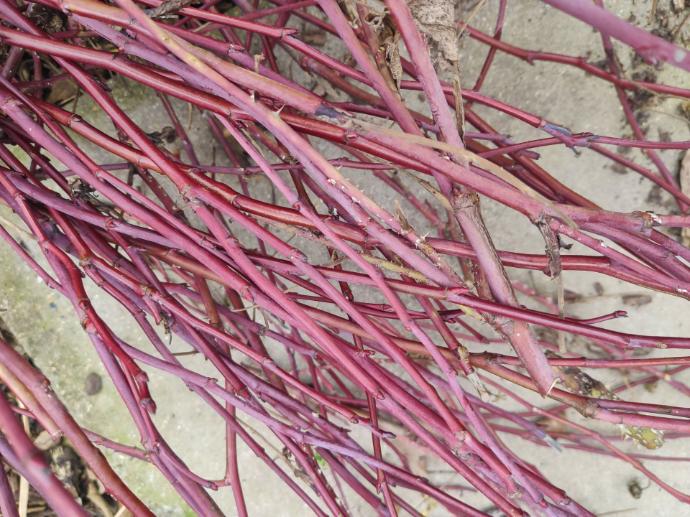
Two elegant shrubs that literally light up in autumn.
Their leaves change from fresh green to copper red, while the reddened stems become increasingly prominent.
A beautiful combination of foliage and wood that adds structure to the garden when the flowers have faded.
R. rugosa and its varieties
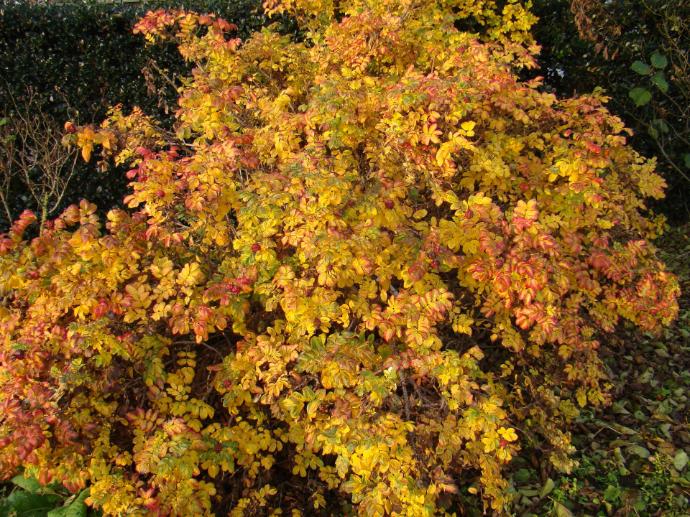
The sturdy leaves of this coastal dweller usually turn buttery yellow, sometimes with a hint of orange or red.
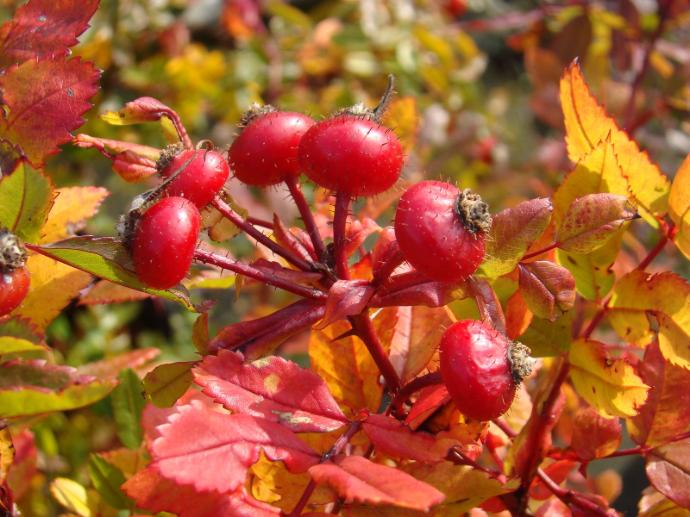
At the same time, the large, glossy hips hang like miniature lanterns among the changing foliage — a classic feature of any autumn garden.
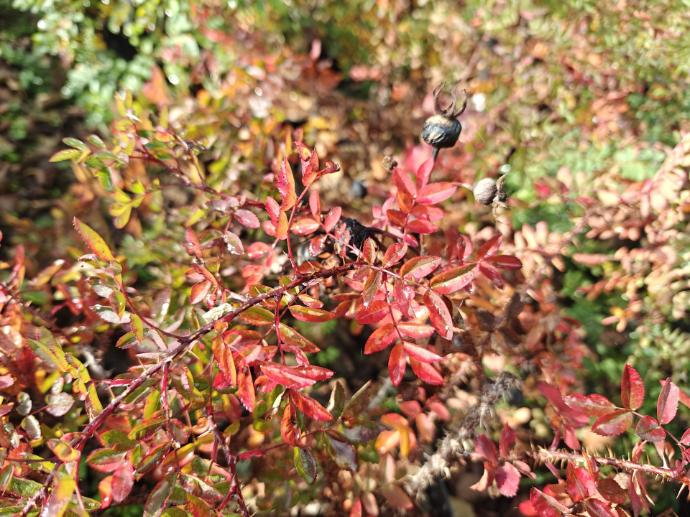
R. pimpinellifolia types
Their finely divided leaves pass through a range of shades — from olive green to gold, amber, and sometimes with a purplish tinge — before gently falling.
A subtle beauty that is especially striking when backlit.
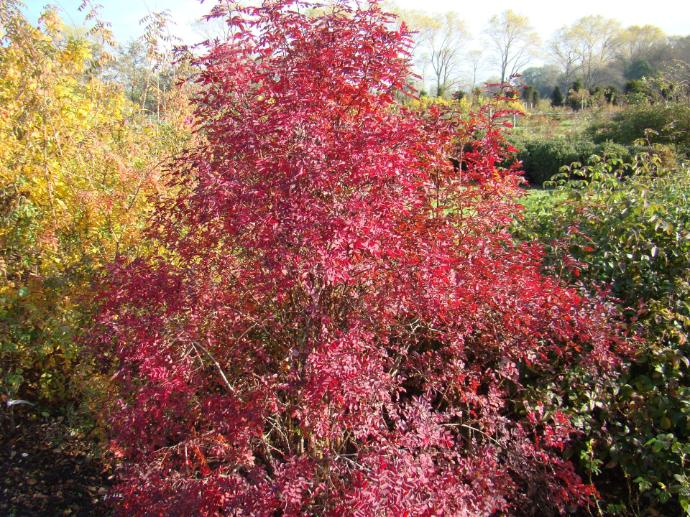
R. palustris, R. virginiana, R. carolina, R. kochiana, R. blanda
These species showcase the best of their American heritage: flamboyant red and purple leaf tones that glow in the low autumn sun.
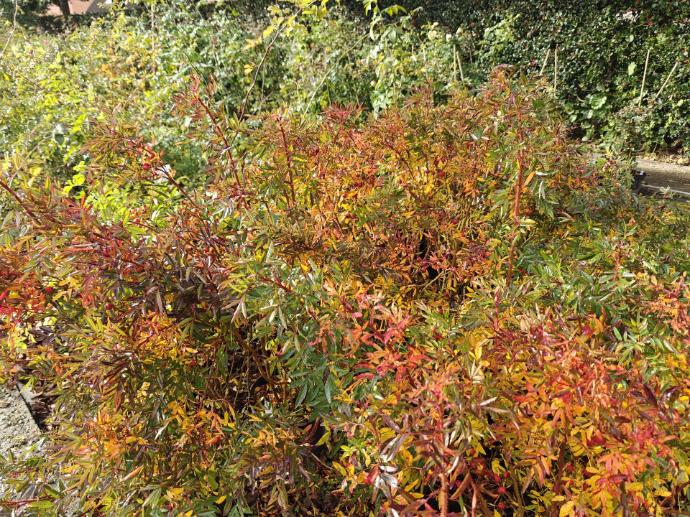
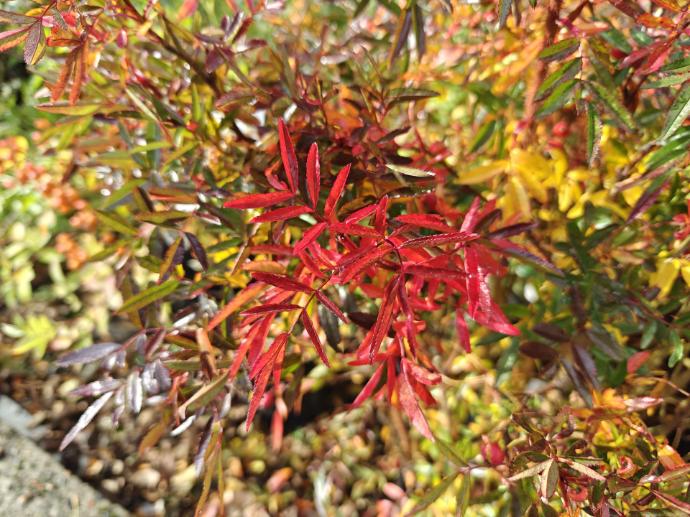
R. nitida
One of the most intensely coloured roses of all.
Its glossy, narrow leaves change from dark green to bright crimson, with hints of orange, purple, and fiery red.
The fine texture makes the colours even more vibrant, especially when backlit.
Even without flowers, Rosa nitida in October and November is a showstopper that makes autumn literally shine.
A final play of light
Let the roses stand a little longer with their changing leaves and hips.
They are not only beautiful, but also provide food for birds and shelter for insects.
And if you look closely, in every red-tinted stem or buttery yellow vein, you can see nature folding in on itself — preparing to bloom again.