Begonia grandis
Hardy perennial with green leaves featuring red undersides, and pink summer–fall blooms; thrives in moist shade and naturalizes via leaf axil bulbils.
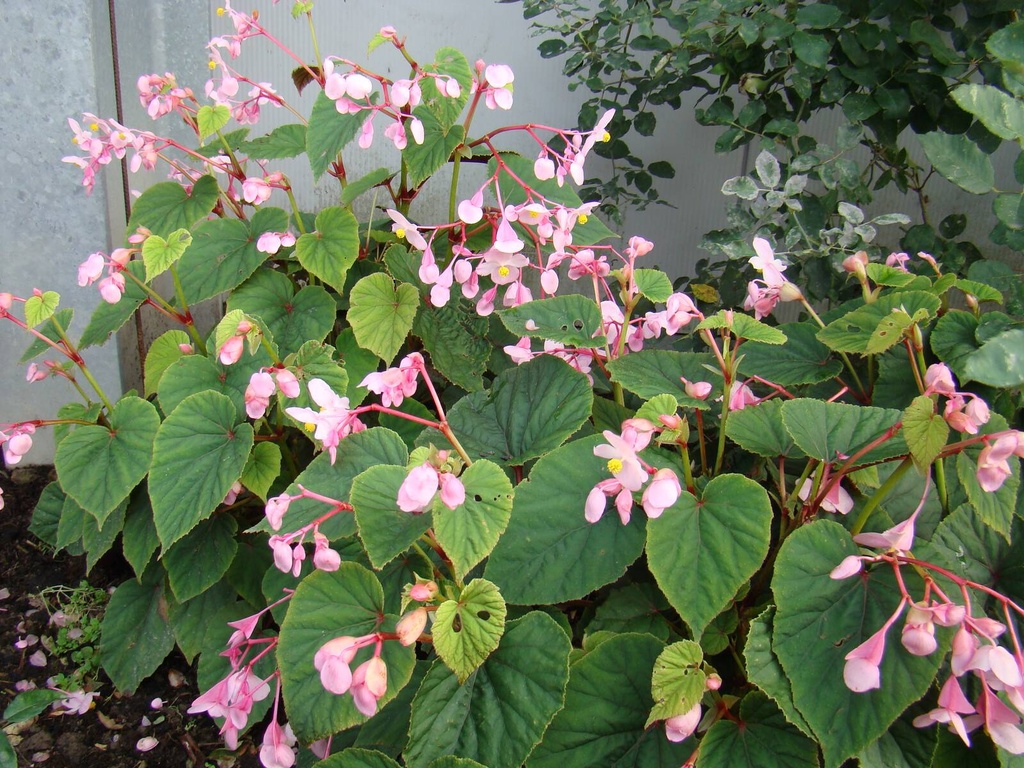
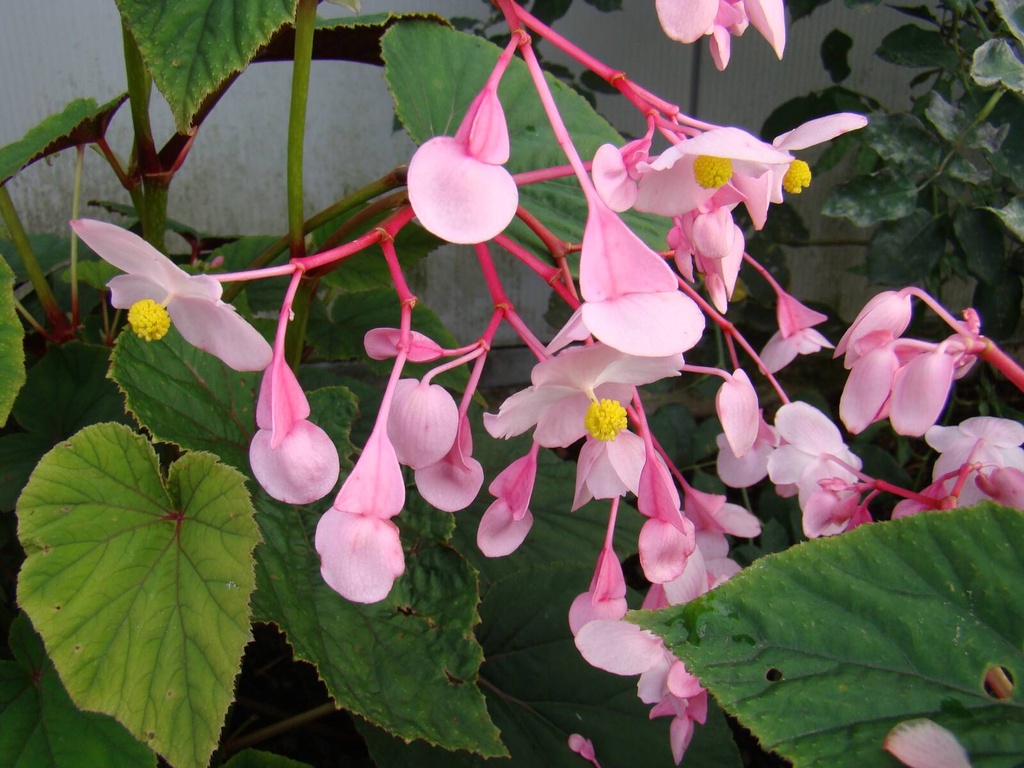
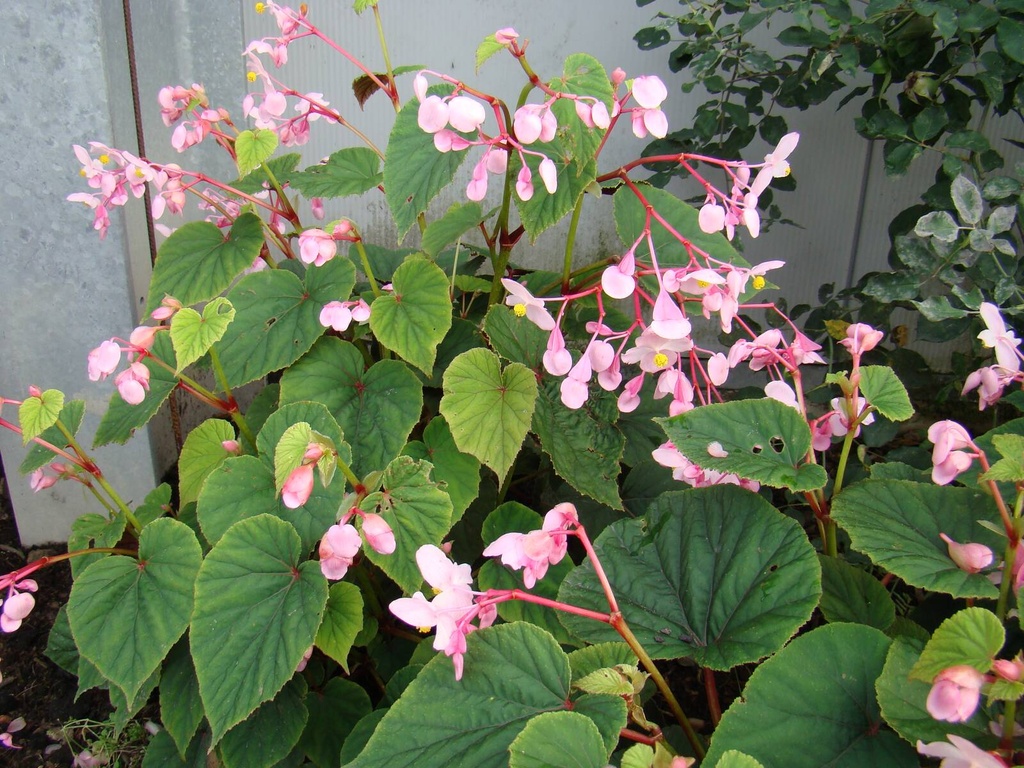
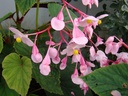
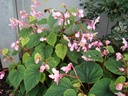
Begonia grandis, known as the hardy begonia, is a durable perennial native to China and Japan. It forms a rounded mound of foliage approximately 45–90 cm (18–36 in) tall and wide. The leaves are heart-shaped, medium-olive green on top, with a striking reddish underside and veining. From mid-summer through early fall, it produces loose, pendulous clusters of small pink fragrant flowers that attract bees and other pollinators.
It thrives in partial to full shade, in moist, organic-rich, well-draining soil, and should not be allowed to dry out. Hardy down to USDA zone 6 (and often survives in zone 5 with protection), it benefits from heavy mulching in colder climates. In autumn, as foliage dies back, small bulbils form in the leaf axils and fall to the ground, sprouting the next spring and allowing natural colony formation.
Care: Low-maintenance; deadheading promotes extended flowering. Excellent in shade gardens, woodland borders, or containers, pairing well with hostas, ferns, or other shade-loving plants.
Flowering occurs from July to August, when delicate, bell-shaped flowers in shades of lilac, pink, or white emerge on short, almost hidden stems nestled among the foliage. These are followed by small, glossy black berries that add ornamental interest into autumn.
Ophiopogon wallichianus prefers partial to full shade and thrives in humus-rich, well-drained yet consistently moist soils. It can tolerate full sun if sufficient moisture is provided. Hardy in Belgian climates, young plants may benefit from light winter protection during severe frosts.
This plant requires little maintenance: cutting back old foliage in early spring encourages fresh, tidy growth. It is ideal for use as underplanting beneath shrubs, in shaded borders, along paths, or as ground cover in woodland gardens.
Ecologically, its flowers provide modest nectar for bees and other small pollinators, but its primary value lies in enhancing shaded garden areas with texture and structure.
Begonia grandis, known as the hardy begonia, is a durable perennial native to China and Japan. It forms a rounded mound of foliage approximately 45–90 cm (18–36 in) tall and wide. The leaves are heart-shaped, medium-olive green on top, with a striking reddish underside and veining. From mid-summer through early fall, it produces loose, pendulous clusters of small pink fragrant flowers that attract bees and other pollinators.
It thrives in partial to full shade, in moist, organic-rich, well-draining soil, and should not be allowed to dry out. Hardy down to USDA zone 6 (and often survives in zone 5 with protection), it benefits from heavy mulching in colder climates. In autumn, as foliage dies back, small bulbils form in the leaf axils and fall to the ground, sprouting the next spring and allowing natural colony formation.
Care: Low-maintenance; deadheading promotes extended flowering. Excellent in shade gardens, woodland borders, or containers, pairing well with hostas, ferns, or other shade-loving plants.
Flowering occurs from July to August, when delicate, bell-shaped flowers in shades of lilac, pink, or white emerge on short, almost hidden stems nestled among the foliage. These are followed by small, glossy black berries that add ornamental interest into autumn.
Ophiopogon wallichianus prefers partial to full shade and thrives in humus-rich, well-drained yet consistently moist soils. It can tolerate full sun if sufficient moisture is provided. Hardy in Belgian climates, young plants may benefit from light winter protection during severe frosts.
This plant requires little maintenance: cutting back old foliage in early spring encourages fresh, tidy growth. It is ideal for use as underplanting beneath shrubs, in shaded borders, along paths, or as ground cover in woodland gardens.
Ecologically, its flowers provide modest nectar for bees and other small pollinators, but its primary value lies in enhancing shaded garden areas with texture and structure.
Standard Roses
Our Selections
Recently viewed:
Order on our website, by mail or phone
We are happy to help you