Onoclea sensibilis
Distinctive fern with hand-shaped fronds and a preference for moist, shaded soils; perfect for pond edges, rain gardens, or natural wetland areas.
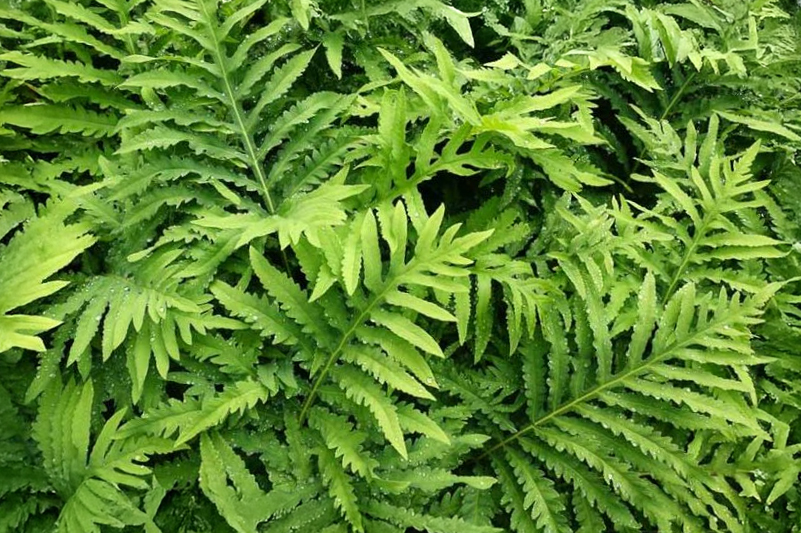
Onoclea sensibilis, commonly known as the sensitive fern, is a striking deciduous fern valued for its distinctive frond shape and preference for moist, shaded environments. This native perennial spreads slowly via creeping rhizomes and forms loose colonies. It typically grows 40 to 60 cm tall. The light green, broadly lobed fronds have a hand-like, open structure, lending a lush appearance to woodland plantings.
One of its unique features is the presence of two frond types: sterile fronds, which are broad and arching, and fertile fronds, which appear later in the season and stand upright with bead-like sori that turn dark brown and persist into winter.
This fern thrives in consistently moist, humus-rich soils in partial to full shade. It performs poorly in dry conditions and may wilt if not provided with enough water. Onoclea sensibilis is ideal for pond edges, rain gardens, and shaded wetlands, and is fully hardy in Belgian climates.
Maintenance is minimal, limited to removing dead fronds in early spring. It can spread through rhizomes over time, making it suitable for naturalistic plantings, though less so for tightly controlled garden beds.
Ecologically, while it does not provide nectar or pollen, the plant contributes to garden biodiversity by offering cover and habitat in moist, shaded environments.
Onoclea sensibilis, commonly known as the sensitive fern, is a striking deciduous fern valued for its distinctive frond shape and preference for moist, shaded environments. This native perennial spreads slowly via creeping rhizomes and forms loose colonies. It typically grows 40 to 60 cm tall. The light green, broadly lobed fronds have a hand-like, open structure, lending a lush appearance to woodland plantings.
One of its unique features is the presence of two frond types: sterile fronds, which are broad and arching, and fertile fronds, which appear later in the season and stand upright with bead-like sori that turn dark brown and persist into winter.
This fern thrives in consistently moist, humus-rich soils in partial to full shade. It performs poorly in dry conditions and may wilt if not provided with enough water. Onoclea sensibilis is ideal for pond edges, rain gardens, and shaded wetlands, and is fully hardy in Belgian climates.
Maintenance is minimal, limited to removing dead fronds in early spring. It can spread through rhizomes over time, making it suitable for naturalistic plantings, though less so for tightly controlled garden beds.
Ecologically, while it does not provide nectar or pollen, the plant contributes to garden biodiversity by offering cover and habitat in moist, shaded environments.
Standard Roses
Our Selections
Recently viewed:
Order on our website, by mail or phone
We are happy to help you